.png)


Step by step event planning: boost car and water sports

TL;DR:
Proper permit planning and safety equipment are essential for successful outdoor community events.
Engaging volunteers with clear roles and community-focused promotion builds stronger attendee involvement.
Preparing contingency plans helps manage weather issues and unexpected challenges effectively.
Planning a local car meet or water sports outing sounds straightforward until the day arrives and half your attendees are confused about the location, safety gear is missing, and no one has a permit. These frustrations are more common than most organisers admit, and they kill community momentum fast. The good news is that a clear, step-by-step approach solves the vast majority of these headaches before they start. This guide walks you through everything from gathering the right equipment and securing permits to engaging your community and troubleshooting on the fly, so your next event builds real belonging rather than regret.
Table of Contents
Key Takeaways
Point | Details |
Preparation beats improvisation | The best events start with early permitting, clear roles, and thorough safety planning. |
Community is core | Engaging volunteers and participants fuels stronger, longer-lasting events. |
Handle the unexpected | Contingency plans for weather, permits, and logistics ensure smooth execution and peace of mind. |
Stepwise clarity | Structured checklists and scripts simplify event organisation and reduce stress. |
Gathering requirements and assembling your toolkit
Now that you know the stakes, let’s start by figuring out what you need before the day arrives. Whether you’re planning a cruise night along the coast or a kayak paddle through a national park, preparation is where events are won or lost.
The single most important early step is securing permits. For outdoor automotive or water-based gatherings, you should begin the permit application process six to eight weeks before your event date. Councils, parks authorities, and waterway managers all have their own timelines, and delays are common. Starting late means scrambling, which puts the entire event at risk.
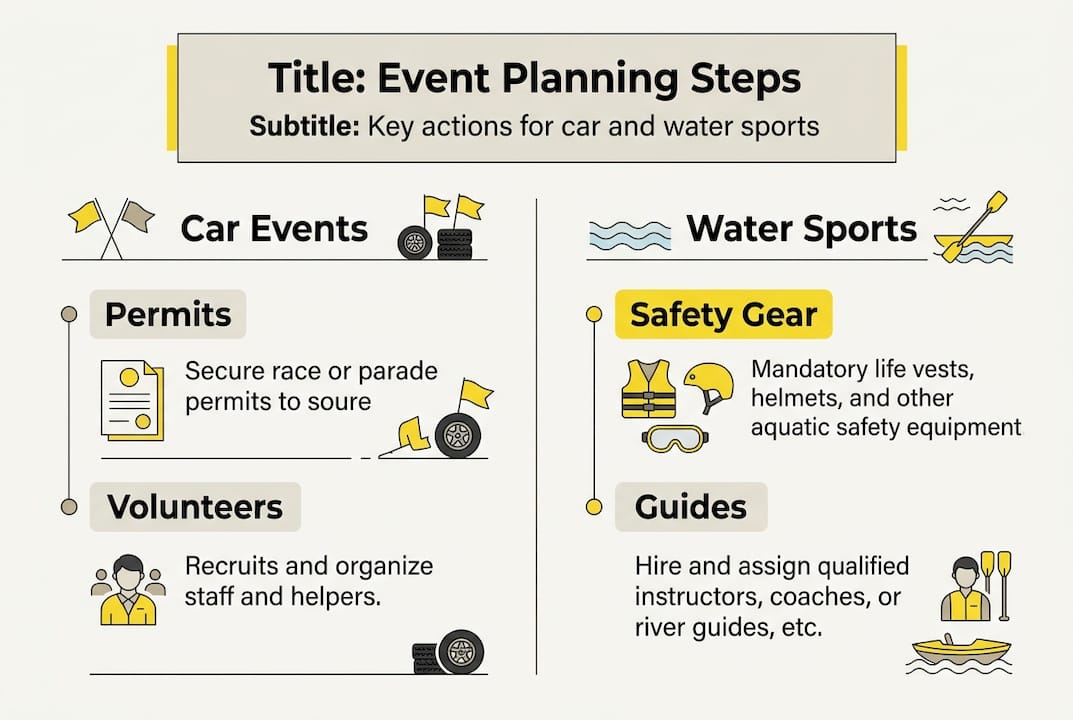
For car and water sports event success, your essential toolkit will vary by activity. Here’s a breakdown of must-haves:
Water sports events:
Certified safety guides and water rescue personnel
Life jackets sized for all participants, including children
Emergency communication devices (radios, flares)
Rescue boats or paddleboards positioned at key points
Clearly marked entry and exit points for accessibility
Waste management stations to protect the waterway
Automotive events:
Reflective signage and traffic control plans
First aid kit and designated first aid officers
Parking marshals with high-visibility vests
Noise monitoring if the event is near residential areas
Fuel spill kits for any static displays or racing activities
As this water sports event guide outlines, water events require certified guides, life jackets and permits lodged well in advance alongside emergency and accessibility planning.
Requirement | Water sports events | Automotive events |
Permit lead time | 6-8 weeks | 4-6 weeks |
Safety personnel | Certified water guides | First aid officers |
Emergency equipment | Rescue boats, life jackets | First aid kits, spill kits |
Accessibility needs | Ramp access, shallow entry | Accessible parking, pathways |
Waste management | Waterway protection bins | Fuel spill kits, rubbish stations |
Volunteers are the backbone of any community event. Use modular volunteer training, which means breaking training into short, focused sessions on specific roles like crowd management, first aid awareness, or equipment setup. This approach respects volunteers’ time and makes it easier to fill gaps quickly if someone cancels.
Pro Tip: Create a simple one-page role brief for every volunteer position. When people know exactly what they’re responsible for, they act with far more confidence on the day.
Step by step event planning process
With your toolkit ready, here’s how to move from a spark of inspiration to a well-structured event.
Define your concept and goals. What kind of community experience do you want to create? A casual Sunday car meet feels very different from a timed jet ski relay. Set clear goals around attendance, safety, and community connection.
Choose your date, time, and location. Check competing local events, tide charts for water venues, and council availability. Avoid scheduling conflicts with major motorsport or aquatics calendars.
Start permitting and safety planning immediately. As noted in this event management guidance, start permitting earliest for outdoor events and use checklists to manage nuances like tides, traffic controls, and volunteer no-shows.
Build your volunteer team and assign roles. Recruit early and assign modular training sessions by role. Use car event planning tools to track volunteer commitments and task ownership.
Promote the event. List your gathering on automotive event calendars and relevant social platforms. Build anticipation with countdowns, behind-the-scenes posts, and early bird registration.
Run a pre-event briefing. Gather all volunteers and key staff the day before or morning of the event. Walk through safety protocols, emergency contacts, and each person’s script.
Execute and monitor. Assign someone specifically to watch for safety issues throughout the event. Keep communication channels open between all team leads.
Post-event review. Debrief with your team, collect participant feedback, and document what worked and what didn’t.
Here’s how preparation differs between event types:
Planning phase | Car events | Water sports events |
Location scouting | Sealed roads, car parks | Waterway access, depth checks |
Safety focus | Traffic flow, noise | Rescue boats, weather monitoring |
Permits | Council road use approval | Waterway authority, environment permits |
Volunteer briefing | Parking, crowd flow | Water safety, emergency rescue |
“Checklists and volunteer scripts are not just admin tools, they are your insurance policy against the chaos that comes with real-world events.”
Engaging your audience and boosting participation
Once you’ve set the framework, it’s vital to get people excited and involved. Great logistics mean nothing if the community doesn’t show up.
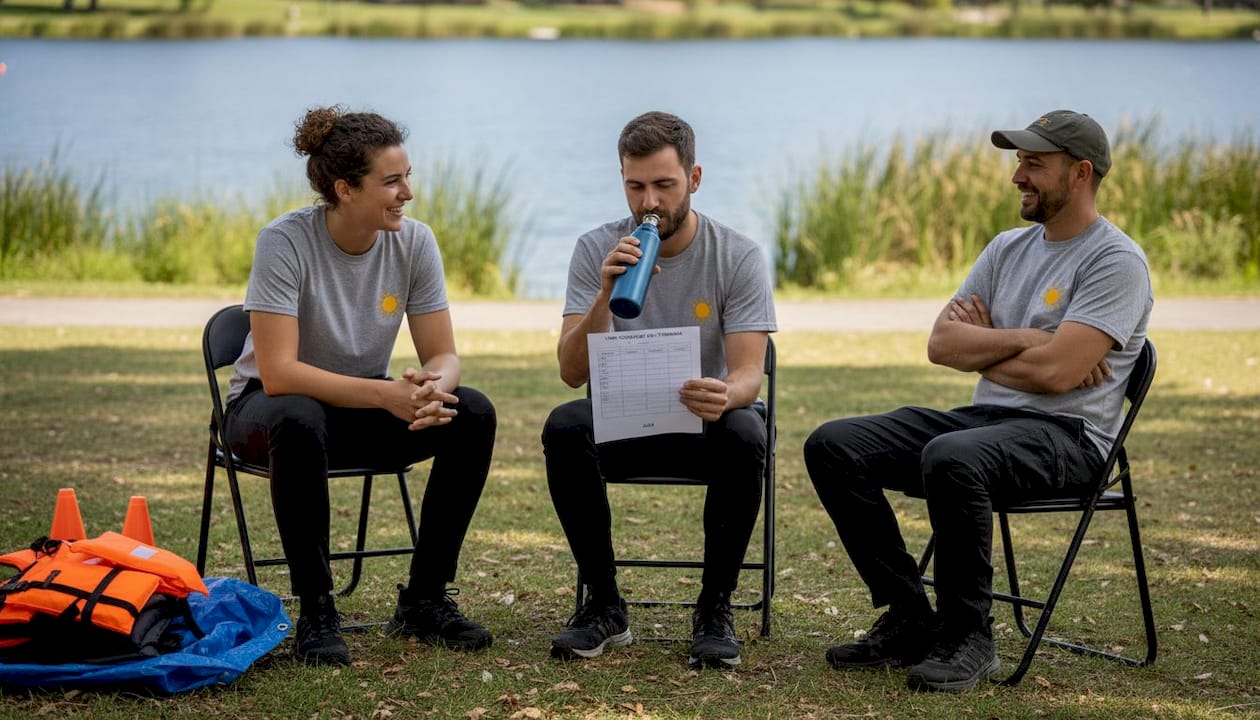
Start with your promotional channels. Post consistently on social media in the weeks leading up to the event, mixing practical information with photos and stories from past gatherings. People respond to community energy, not just event details. Use dedicated personalised event engagement strategies to tailor messaging for different segments of your audience, such as first-timers versus regulars.
Here are proven ways to boost attendance and involvement:
Feature community members prominently. Spotlight a local car builder or a respected paddler in your pre-event content. People turn up to see their peers recognised.
Offer accessible entry points for newcomers. Label beginner-friendly sections clearly. First-timers who feel welcomed become loyal regulars.
Create a post-event highlight reel. Photos and videos shared after the event extend community engagement well beyond the day itself.
Reward volunteers publicly. Acknowledge their effort at the event and across social channels. Recognition drives repeat involvement.
Use mystery or themed events occasionally. A surprise location or themed cruise night generates curiosity and stronger word-of-mouth.
As highlighted in this water sports event guide, modular volunteer training and clear scripts help manage crowd flow and responsiveness at water events, which directly improves the experience for every attendee.
Understanding the role each person plays is just as important as the logistics. Explore the event host roles that make a real difference in how participants feel welcomed and looked after throughout the day.
Pro Tip: Set up a simple post-event survey with three questions: What did you enjoy most? What could be improved? Would you bring a friend next time? The responses will shape your next event more than any planning template.
Solving common challenges and troubleshooting
Even the best-planned events can run into snags; here’s how to tackle the most common challenges.
Weather changes rapidly. For water events especially, conditions can shift within hours. Always have a postponement or relocation plan ready, and communicate it to attendees via SMS or your event platform before the day begins. As this water sports event guide makes clear, emergency plans must cover rescue boats, accessible features, and contingencies for unforeseen issues.
Common challenges and how to address them:
Permit delays: Lodge applications early and follow up weekly. Have a backup venue in case a permit is denied close to the date.
Volunteer no-shows: Always recruit 20% more volunteers than you think you need. Assign a float volunteer with no fixed role who can step in anywhere.
Low attendance: Use RSVP incentives like exclusive merchandise or priority parking. Check your timing against local competing events.
Safety incidents: Establish a clear escalation chain before the event. Every volunteer should know who to call and in what order.
Noise or traffic complaints from locals: Introduce yourself to neighbouring residents or businesses beforehand. Proactive communication prevents reactive complaints.
For water events, appoint a dedicated safety officer who has no other responsibility on the day. Their sole job is monitoring conditions, overseeing rescue equipment, and making the call to pause or end the event if needed.
For automotive events, understanding car event differences is helpful when planning traffic flows and crowd control, as the dynamics of a car meet differ significantly from a water-based gathering.
“The events that build the strongest communities are often the ones that faced a real challenge and handled it with transparency and calm.”
Post-event, document every issue in a simple incident log. This record becomes your most valuable planning tool for next time.
What most planners overlook: Community-driven event success
Here’s the honest truth that most planning guides skip: the size of your event matters far less than the authenticity of it. Organisers often chase bigger attendance numbers, flashier venues, and more sponsors, when the local community is craving something much simpler: to feel genuinely included.
Small, consistent events build stronger loyalty than large, sporadic ones. A monthly car meet where the same faces show up, swap stories, and welcome newcomers creates more lasting belonging than a one-off festival ever will. The same applies to a regular Saturday morning paddle group.
Mistakes are not failures. They’re the moments where real community connection happens. When an event runs into trouble and the organiser handles it honestly, volunteers and attendees rally around the cause. That kind of trust is irreplaceable. Lean into the event host wisdom of listening to your community after every event and acting on what they tell you. The communities that grow the fastest are not the loudest. They are the most consistent, transparent, and genuinely welcoming.
Ready to level up your event planning?
If these steps have sparked ideas for your next car meet, cruise, or water sports outing, you don’t have to figure it out alone. AutoSocial is built specifically for automotive and water sports communities like yours.
Through event planning solutions on AutoSocial, you can discover events in your area, list your own gatherings, and connect with passionate enthusiasts who share your interests. The platform brings together everything scattered across forums and Facebook groups into one focused, community-first space. Whether you’re planning your first jet ski meetup or your twentieth car show, AutoSocial gives you the tools and the audience to make it count.
Frequently asked questions
How far in advance should I start planning event permits?
For outdoor water or car events, permits need lodging six to eight weeks before the event date to allow for council and authority review times.
What are the key safety requirements for water sports events?
Certified guides, life jackets, emergency plans, and accessible entry and exit features are all essential. Rescue boats and accessibility features should be confirmed well before the event date.
What’s the best strategy to engage volunteers for local events?
Use clear role scripts, modular training sessions, and public recognition to encourage involvement. Modular training and scripts significantly boost volunteer confidence and reliability on the day.
How should event organisers deal with last-minute weather changes?
Have a documented contingency plan ready before the event, including postponement procedures and communication templates. Contingency planning is essential for any outdoor water or automotive event.
Recommended


Comments