.png)


How car events stand out: key differences from motor gatherings

TL;DR:
Car events are held on sealed tracks with structured formats and restricted access.
Water sports events occur on open water with informal spectator interaction and open pit areas.
Organizers must tailor safety, permits, and community engagement strategies to each event type.
Most people assume that if you’ve been to one motor event, you’ve been to them all. Same roar of engines, same crowd energy, same general vibe. But that assumption misses a lot. Car events, from drag nights to rally stages, operate in a completely different world compared to water sports gatherings like hydroplane races or watercross competitions. The format, the safety requirements, the community feel, and even the way spectators interact with the action are all distinct. Understanding these differences helps you get more out of attending, and far more out of organising.
Table of Contents
Key Takeaways
Point | Details |
Event formats differ | Car events happen on tracks with strict rules, while water sports occur on lakes and rivers with open access. |
Attendee experiences vary | Car events often have structured seating and access, while water sports offer more informal, accessible engagement. |
Safety and planning are critical | Car event organisers must meet higher safety and logistical standards compared to water sports. |
Community is central | Both event types build community but use different methods—clubs versus informal groupings. |
What sets car events apart?
With the question in mind, let’s unpack what truly makes a car event unique, starting with their fundamental setup.
At the most basic level, car events and water sports events are shaped by their physical environments. Car racing happens on sealed tracks, purpose-built circuits, or closed public roads. Water sports events unfold on lakes, rivers, and bays. That distinction alone changes everything: the infrastructure, the spectator setup, the noise, and the risk profile.
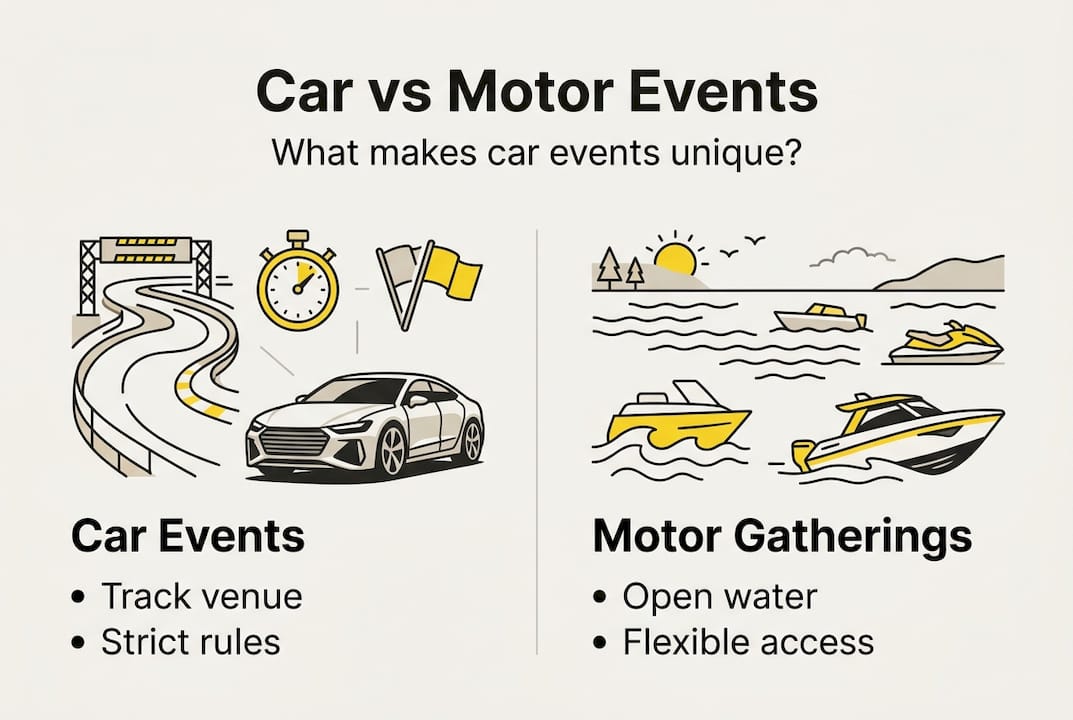
Car racing events like NASCAR, drag racing, and rally use dedicated tracks and roads where cars can exceed 200 mph, with staged formats and tightly controlled access. Water sports races such as hydroplane and watercross competitions run on open water at speeds between 70 and 120 mph, often with free spectator access and open pit areas. That’s a meaningful contrast in both spectacle and accessibility.
Here’s a quick comparison to make it concrete:
Feature | Car events | Water sports events |
Venue type | Track, circuit, closed road | Lake, river, bay |
Typical top speed | 200+ mph | 70 to 120 mph |
Spectator access | Ticketed stands, restricted zones | Open lakeside, free access |
Pit access | Usually restricted | Often open to public |
Event format | Staged heats, qualifying rounds | Open racing, festival-style |
You can explore the full range of motorsport event types to see just how varied the landscape really is.
Some key structural differences that shape the car event experience include:
Staged formats that build tension across qualifying, heats, and finals
Permanent venues with grandstands, pit lanes, and dedicated marshalling zones
Higher speed thresholds requiring more robust safety infrastructure
Ticketed entry that creates a more curated, controlled atmosphere
“The format of a car event isn’t just logistical. It shapes the entire emotional experience, from the moment you walk through the gates to the final chequered flag.”
If you’re planning to build event calendars for your community, knowing these structural differences is the starting point.
Comparing attendee experiences
Once the event format is clear, the real-world experience for attendees becomes the focus.
Attending a car event and attending a water sports event can feel like two entirely different days out, even if both involve machines going very fast. The atmosphere, the level of access, and the social energy are genuinely different.
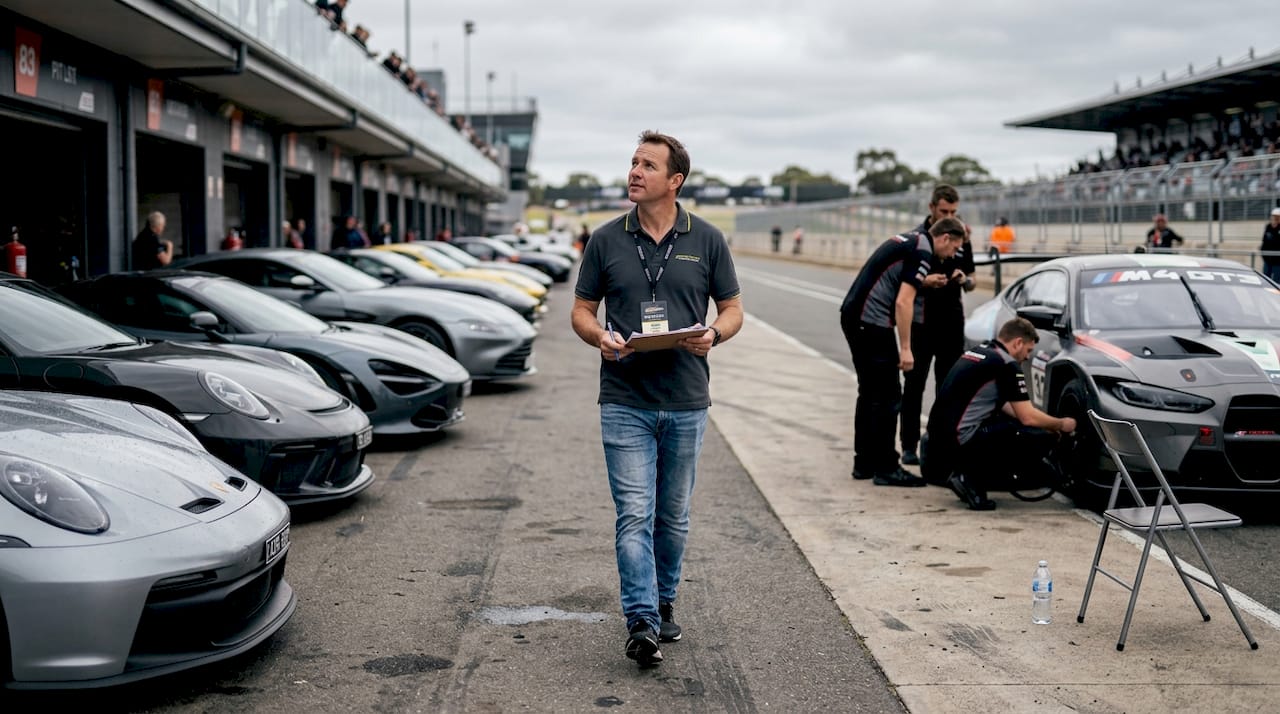
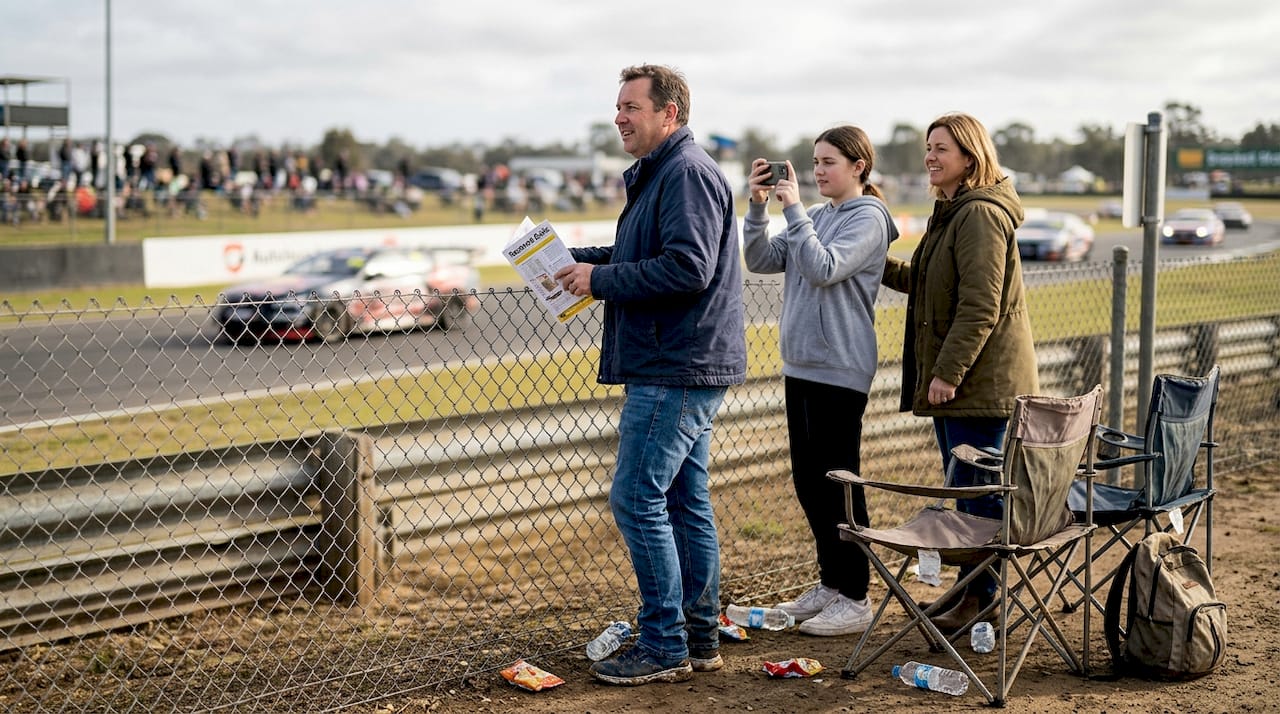
Spectator access and interactive pit areas differ greatly between car and water events. At most car racing events, spectators are positioned in grandstands or designated viewing zones, with pit lane access reserved for credential holders. Water sports events tend to be far more open. You can often walk right up to the pit area, chat with competitors, and watch mechanics work on craft between heats.
Here’s how the attendee experience breaks down across key dimensions:
Experience factor | Car events | Water sports events |
Atmosphere | High-adrenaline, structured | Relaxed, festival-like |
Pit access | Restricted, credential-based | Open or semi-open |
Spectator zones | Grandstands, fenced areas | Lakeside, informal setup |
Crowd engagement | Cheering, commentary-led | Casual, social |
Duration | Often full-day or multi-day | Shorter, more spontaneous |
For attendees looking to get the most out of either type of event, here’s a practical approach:
Arrive early to secure good viewing positions, especially at car events where grandstands fill quickly.
Check the programme ahead of time so you know when key heats or races are scheduled.
Engage with the community by joining group chats or forums before the event to find others attending.
Explore the pits at water sports events, where access is more relaxed and conversations happen naturally.
Follow up after the event to maintain connections you’ve made on the day.
The benefits of user-generated events show that grassroots gatherings often outperform professionally run events in terms of genuine community connection.
Pro Tip: If you’re attending a car event for the first time, spend the first hour simply walking the venue before the racing starts. You’ll get a feel for the layout, find the best viewing spots, and meet people in a relaxed setting before the noise and energy ramp up.
The role of event hosts is especially important here. A good host bridges the gap between the event programme and the attendee experience, making sure people feel welcomed and engaged throughout.
Event organisation and safety protocols
Understanding what’s expected for attendees leads to what’s involved behind the scenes at each type of event.
Organising a car event is a different beast from organising a water sports gathering. Both require careful planning, but the specific demands vary considerably based on venue, speed, and risk.
Car events and water sports have different safety needs due to location and speed. Car events at permanent circuits benefit from existing infrastructure: armco barriers, tyre walls, fire suppression systems, and trained marshals positioned at fixed points. Temporary setups, like street circuits or paddock events, require organisers to install all of that from scratch.
Water sports events face a different set of challenges. Open water means rescue boats, trained water safety personnel, and clear communication protocols are essential. Weather conditions can change rapidly, and visibility on water is harder to control than on a sealed track.
Key safety and organisational considerations for each event type:
Car events:
Permanent or temporary physical barriers along the racing line
Trained marshals with flag systems and radio communication
Medical teams on standby with clear access routes
Permits from local councils and motorsport governing bodies
Noise management plans for residential areas nearby
Water sports events:
Rescue boats and trained water safety officers on the water
Clear course boundaries marked with buoys
Weather monitoring and cancellation protocols
Shore-based first aid and emergency response teams
Permits from maritime authorities and local councils
Pro Tip: For any event type, publish a clear safety briefing document and share it with all participants and volunteers at least one week before the event. This reduces confusion on the day and demonstrates to permit authorities that you’re organised and responsible.
For practical guidance, the local event safety tips resource covers both environments in detail and is worth bookmarking if you’re planning your first event.
Timeline planning is also critical. Car events at established venues often require permit applications six to twelve months in advance. Smaller community gatherings and water sports meetups may have shorter lead times, but underestimating the paperwork is a common mistake that catches new organisers off guard.
Networking and community at events
With planning and safety in mind, let’s look at how these events serve as hubs for enthusiasts and communities.
Networking and community building are often more structured in automotive events, while water sports foster informal connections. Both are valuable, but they work differently, and understanding that helps you tap into the right energy at the right time.
Car events tend to attract organised clubs and associations. There are often scheduled meet-and-greet sessions, club display areas, and formal networking opportunities built into the programme. Repeat attendance is common because the structured format creates a sense of continuity and belonging. You see the same faces each season, and those relationships deepen over time.
Water sports events have a different flavour. The open-access nature of most gatherings means conversations happen spontaneously. Someone paddled the same stretch of water as you last summer, and suddenly you’re planning a joint trip. That informality is a strength, not a weakness.
Here are practical ways to build community at both event types:
Create a dedicated group chat before the event so attendees can connect in advance
Designate a community area at the venue where people can gather between sessions
Encourage participants to share content from the event on social platforms to extend the reach
Follow up with a post-event recap to keep the momentum going and set the scene for the next gathering
Recognise regulars and contributors publicly, as acknowledgement builds loyalty
“The best events don’t end when the last car crosses the finish line or the last watercraft docks. They end when the last conversation wraps up in the car park.”
Exploring event networking ideas gives you a toolkit for making those connections more intentional and lasting. And the community health benefits of regular gatherings are well documented, from reduced isolation to increased motivation and shared purpose.
Why these differences matter (and what most guides miss)
Summing up the unique qualities of these events, here’s an overdue reality check.
Most generic event guides treat all motorsport gatherings as interchangeable. They offer the same advice whether you’re organising a drag night or a jetski meetup. That’s a problem. The differences between car events and water sports events aren’t just cosmetic. They affect everything from your permit applications to your safety plan to the way your community forms and grows.
Organisers who understand these distinctions make better decisions. They don’t apply a car event safety framework to a water-based gathering and wonder why it doesn’t fit. They don’t expect the informal social energy of a lakeside meetup to translate directly to a ticketed circuit event.
Attendees benefit too. When you understand what kind of event you’re attending, you can prepare properly, engage more meaningfully, and get far more out of the experience. The event success strategies that work are almost always the ones tailored to the specific event type and community involved. Generic advice gets generic results. Know your event, know your audience, and build from there.
Ready to experience or host your next event?
If you’re inspired to get more involved or elevate your event, here’s where to start.
Whether you’re keen to attend your first local car meet or you’re ready to organise a full watercraft gathering, having the right platform behind you makes a real difference. AutoSocial is built specifically for automotive and water sports enthusiasts who want to connect, discover, and create events that actually matter to their community.
From private group chats and themed profiles to public and mystery events, AutoSocial gives you the tools to make every gathering count. You don’t need to piece things together across Facebook groups and scattered forums anymore. Discover or host events on AutoSocial and connect with a community that shares your passion. Your next great event is closer than you think.
Frequently asked questions
What makes car events more regulated than water sports events?
Car events often require higher safety standards, structured venues, and coordinated permits due to the different safety needs created by high speeds and public risk on sealed roads and circuits.
Is spectator access different at car racing events compared to water sports?
Yes. Car events commonly have dedicated spectator zones with restricted pit access, while water sports events often allow open or lakeside viewing with far fewer barriers between fans and competitors.
How do networking and community feel at automotive versus watercraft events?
Automotive events encourage structured networking through clubs and scheduled sessions, while watercraft gatherings tend to be more informal and spontaneous, with connections forming naturally in relaxed, open environments.
Recommended


Comments