.png)


Automotive social networks: Connect, organise, and thrive

TL;DR:
Automotive social networks are specialized platforms designed for local event discovery, build sharing, and group organization. They outperform general social media by offering interactive maps, RSVP systems, and community-focused features. These platforms foster genuine local engagement and offline connections, supporting sustained community growth.
Scrolling through a generic Facebook group to find a local car meet is frustrating. Posts get buried, notifications are ignored, and event details scatter across comment threads. General social media simply was not built for enthusiasts who want real-world connections around shared passions. Automotive social networks are specialised platforms distinct from mainstream tools, purpose-built for car lovers, motorcycle riders, and water sports fans who want more than likes and shares. This guide breaks down exactly what these platforms offer, how they work, and why they matter for anyone serious about connecting with their local community.
Table of Contents
Key Takeaways
Point | Details |
Specialised networks matter | Purpose-built automotive social platforms outperform generic social media for building communities and organising groups. |
Practical tools drive engagement | Interactive maps, RSVPs, and build logs power local events and real-world connections. |
Offline meets create lasting bonds | Moving from online to offline is essential for sustaining vibrant automotive and water sports communities. |
Community drives innovation | Active networks influence trends like EV adoption and foster grassroots energy. |
What are automotive social networks?
At their core, automotive social networks are specialised platforms and apps designed for car enthusiasts to connect, share builds, discover local events, meetups, and organise group activities. They exist in a completely different category from general social media like Facebook or Instagram. Where mainstream platforms are built for broadcasting to the widest possible audience, automotive networks are deliberately focused, catering to people who care deeply about vehicles, modifications, performance, and the culture that surrounds them.
Think about what happens when a car club tries to organise a cruise night on Facebook. The event gets created, a few people RSVP, and then the algorithm buries the post. Members miss updates. Someone asks about the route in the comments, and the answer gets lost three pages back. By the time the event arrives, half the group didn’t see the final details. This is not a niche frustration. It is a structural problem with tools built for broad reach rather than tight-knit community action.
Specialised automotive networks solve this by putting community organisation at the centre of everything. A few defining features set them apart:
Build sharing and modification tracking: Members can log their vehicle upgrades, share photos at each stage, and receive feedback from others who understand exactly what a suspension lift or engine swap involves.
Local event discovery: Rather than wading through generic event feeds, users see meetups, cruises, and water sports gatherings happening near them right now.
Club and group management: Organising a club across multiple cities or suburbs becomes far more structured, with tools for membership, communication, and event coordination.
Community-specific engagement: Discussions stay relevant. You are not competing with viral memes or political posts for attention in your feed.
It is worth acknowledging the genuine tension here. General social media excels for marketing and user-generated content at scale, but it lacks the focus that specialised platforms offer. Mainstream platforms have the audience. Specialist platforms have the context. For enthusiasts serious about organising automotive events and building lasting local relationships, that context is what makes all the difference.
The best automotive social networks do not try to replace every function of Instagram or Facebook. Instead, they focus on what those platforms genuinely cannot do well: connect passionate people around specific vehicles, activities, and local geography. That targeted focus is their greatest strength.
How these networks work: Key tools and features
Understanding the mechanics of automotive social platforms reveals why they outperform general tools for community building. These platforms use interactive maps, RSVP systems, build trackers with photos and modification logs, club management tools, vendor integrations for parts and deals, and real-time features like location sharing for group drives.
Let’s unpack each of these.
Interactive maps are perhaps the most immediately useful feature. Instead of describing an event location in a text post, organisers pin the exact meeting point on a live map. Attendees can see how far away the event is, find the location without confusion, and even track other members arriving in real time during a group cruise. This alone eliminates one of the biggest pain points in offline event organisation.

RSVP systems bring accountability that generic platforms cannot match. When someone commits through a dedicated automotive network, the platform sends reminders, displays attendee counts, and often allows organisers to communicate directly with confirmed guests. You always know roughly how many cars to expect, which helps with venue selection, timing, and logistics. Checking event calendar tools built specifically for enthusiasts makes a noticeable difference in how smoothly events run.
Build trackers serve a different but equally important purpose. They give members a structured way to document their vehicle journey over time. Logging a new set of coilovers, a paint correction job, or a fresh set of tyres becomes part of a visual record that others in the community can follow, react to, and learn from. It creates engagement that is genuinely meaningful rather than performative.
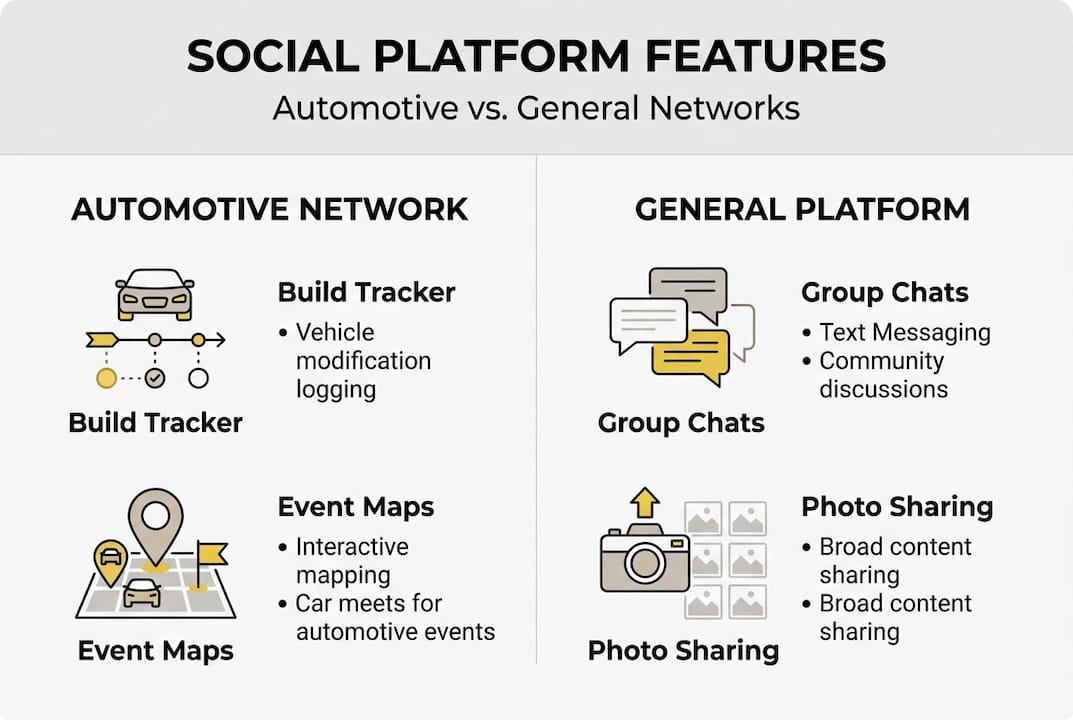
Here is a quick comparison of platform feature types:
Feature | General social media | Automotive social network |
Local event discovery | Limited, algorithm-driven | Map-based, enthusiast-focused |
RSVP and attendee tracking | Basic | Purpose-built for groups |
Build and modification logs | None | Core feature |
Vendor and parts integration | Rare | Common |
Real-time group location sharing | Absent | Available on leading apps |
Community relevance filtering | Broad | Niche and precise |
Vendor integrations add another layer of practical value. Some platforms connect members with parts suppliers, service providers, and local workshops, turning the app into a genuine ecosystem rather than just an event board. For water sports enthusiasts, this might mean access to jetski hire, boat maintenance contacts, or gear suppliers who understand the community.
Pro Tip: When evaluating an automotive social network, look for platforms that combine map-based event discovery with real-time communication tools. That combination is what separates genuinely useful platforms from glorified bulletin boards.
Real-time location sharing during group drives deserves special mention. Being able to see the convoy on a live map, know when someone has pulled over, or find a waypoint without pulling out Google Maps transforms the group drive experience. It keeps everyone together and makes the event safer and more enjoyable for everyone involved.
The real impact: Community, EV adoption, and sustainability
Moving beyond features, the actual outcomes of automotive social networks on communities and the broader industry are substantial and, in some cases, surprising.
Car groups influence EV adoption, with 14 million EVs sold globally in 2024. Long-standing forums like TriStateTuners have maintained active communities for over 20 years, demonstrating that enthusiast-led platforms can sustain genuine loyalty well beyond typical social media trends. However, Reddit discussions also point to failed platforms like DriveTribe, which collapsed partly due to the absence of a viable revenue model, a cautionary tale for any new entrant.
“A platform without a sustainable revenue model is not a community investment. It is a temporary gathering place.”
This tension between community ambition and commercial sustainability shapes which platforms thrive and which disappear. Here is how different platform types compare on key dimensions:
Platform type | Community depth | Discovery reach | Revenue sustainability | EV/sustainability focus |
Long-form forums | Very high | Low | Moderate | Growing |
General social media | Low | Very high | High | Inconsistent |
Dedicated automotive apps | High | Moderate | Developing | Increasing |
Hybrid community platforms | High | High | Variable | Strong potential |
The lessons from platform success and failure point to four consistent patterns:
Authenticity over scale. Communities that prioritise genuine connection outlast those chasing raw user numbers. TriStateTuners survived because members felt genuinely invested in the community, not just the content.
Revenue must support the mission. DriveTribe had brand recognition and media investment, but without a sustainable model connecting revenue to community value, it could not survive. Platforms built on user-generated car events need to align their business model with member activity.
EV integration matters now. As electric vehicles become more common in Australian driveways, automotive communities that welcome and educate EV owners will stay relevant. Communities that resist this shift risk becoming insular.
Local beats global. The most active and enduring communities tend to be built around geography rather than just vehicle type. A local car club with 80 active members who meet monthly generates more real-world impact than a national group with 80,000 members who never interact offline.
The social and wellbeing benefits of these communities also deserve recognition. Regular attendance at car events and meetups provides structure, social connection, and a sense of belonging that goes well beyond the vehicles themselves. Research consistently links community participation to improved mental health and reduced social isolation, and automotive communities deliver this in a form that feels natural and genuinely enjoyable for enthusiasts.
Offline meets: Bringing online connections into the real world
All the tools and features in the world only matter if they translate into real experiences. The most successful automotive social networks understand that online discovery is just the beginning. The actual value is created when people show up in person.
The hybrid model combining online discovery with offline meets is the core methodology that drives community health. Apps like Ryvve and Car Hangout integrate maps and RSVP systems specifically to make that transition from digital to physical as seamless as possible. A member spots a car meet on the interactive map, RSVPs in two taps, receives a reminder the morning of the event, and navigates directly to the location through the app. The friction that typically kills event attendance is almost entirely removed.
Specialised networks prioritise local connections for events and meetups over broad social media reach, which enables genuinely grassroots organisation. A water sports crew planning a weekend jetski session on the Hawkesbury River can coordinate through private group chats, share waypoints, and keep the logistics tight, all within one platform. That capability does not exist in any meaningful way on Facebook or Instagram.
There are some genuine pitfalls to be aware of when moving from online community to offline events:
Overestimating RSVP numbers. Online RSVPs often overcount actual attendance. Plan for roughly 60 to 70 per cent of confirmed attendees showing up, especially for early events where trust in the platform is still being established.
Underinvesting in communication. The transition from online to offline breaks down when communication stops after the RSVP. Regular updates, reminders, and clear event details keep people engaged and informed.
Ignoring new members. First-time attendees often feel uncertain about where to park, who to talk to, or what the format of the event is. A short welcome message or a designated point of contact can make a significant difference in whether that person returns.
Skipping the debrief. After a successful event, the post-event conversation online is where relationships deepen. Sharing photos, tagging participants, and discussing the highlights on the platform keeps the momentum going and builds anticipation for the next gather.
Pro Tip: Use innovative networking ideas to structure your first meetups as low-pressure, casual events. A relaxed car park cruise or a sunset jetski run lowers the barrier to attendance and gives people a reason to come back. Save the big, complex events for when your community has built enough trust and momentum to support them.
Good event planning tools also reduce the coordination burden on organisers. When the platform handles reminders, RSVPs, and location sharing automatically, organisers can focus on the experience itself rather than chasing confirmations through text messages and comment threads. That shift in energy shows up in the quality of every event.
The most enduring offline communities share a common thread: they treat the online platform as infrastructure, not the destination. The app gets people there. The experience keeps them coming back.
Our take: The overlooked essentials for thriving communities
Most conversations about automotive social networks focus on features: better maps, smarter RSVPs, cleaner interfaces. These matter, but they are not what separates communities that thrive for a decade from those that fade after two years.
The real differentiator is the culture of the community itself, and that culture is built offline, not in an app. Platforms that understand this design their tools to support in-person relationships rather than replace them. They recognise that a car meet or jetski session is not just an event; it is the main event. The platform is the pathway.
We also believe the industry underestimates how much authenticity drives retention. Members who feel heard, seen, and genuinely connected to their local group stay active far longer than those who only engage with content passively. User-generated events are proof of this. When community members take ownership of organising gatherings, the investment in the platform increases naturally.
Scale is not the goal. Genuine local engagement is. The platforms that chase massive user numbers often sacrifice the very things that make enthusiast communities worth joining. The future belongs to tools that keep the grassroots energy alive as they grow, not tools that trade it away for metrics.
Next steps: Connect and organise with AutoSocial
You now understand what makes automotive social networks genuinely valuable and what separates the platforms that build lasting communities from those that fade quickly. The next step is putting that knowledge into action.
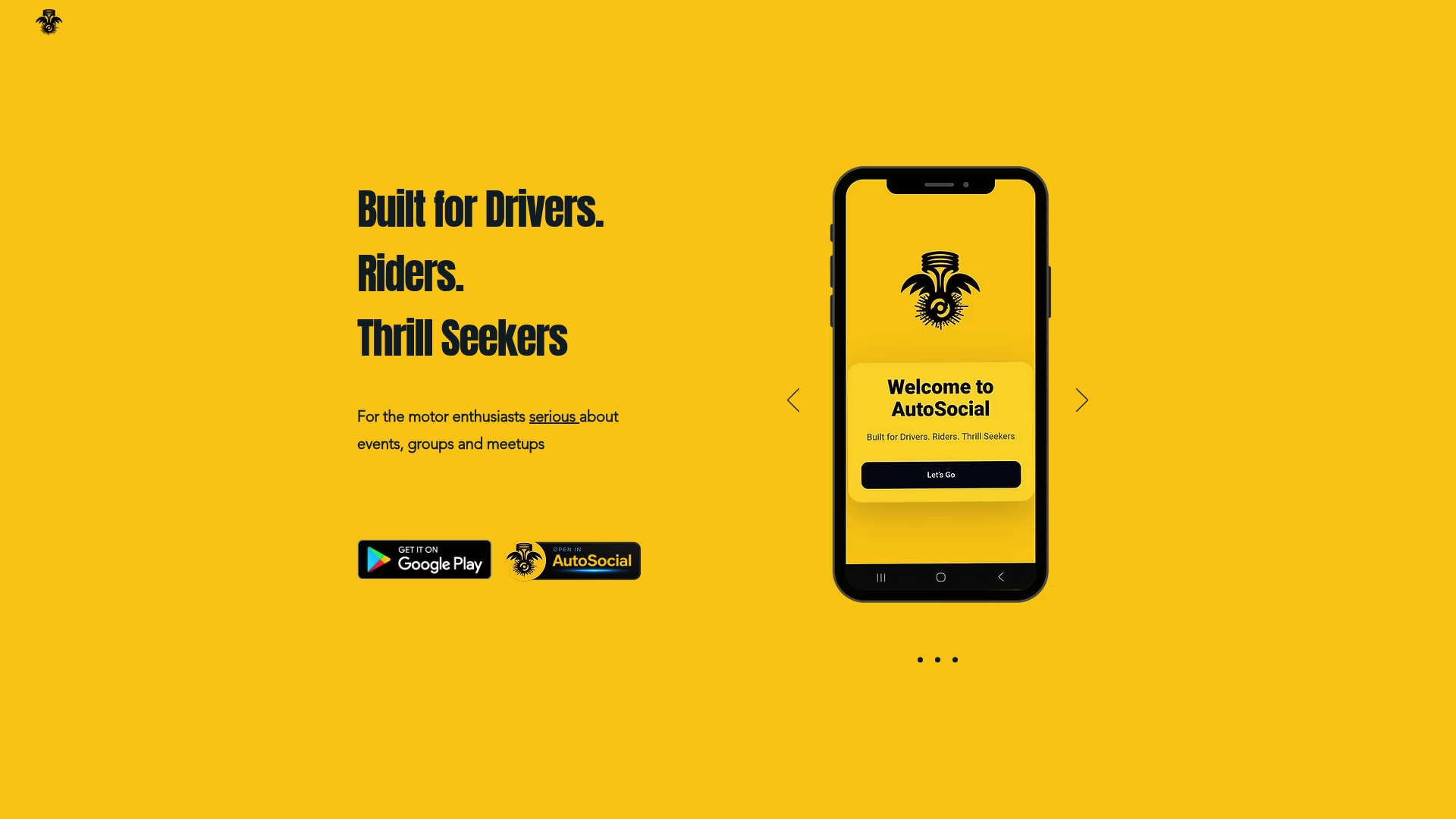
AutoSocial is purpose-built for Australian automotive and water sports enthusiasts who want real connections, not just followers. The platform brings together car meets, motorcycle cruises, jetski gatherings, and water-based events in one centralised space, with interactive maps, RSVP tools, private group chats, and both public and mystery events. Whether you are organising your first local cruise or looking to connect with an established club near you, AutoSocial removes the friction and puts community first. Join a platform that actually understands what you are passionate about.
Frequently asked questions
What makes automotive social networks different from Facebook or Instagram?
Automotive social networks specialise in grassroots event organisation, build tracking, and club management, unlike generic platforms that lack the focus and community-specific features enthusiasts actually need.
How do maps and RSVP systems help enthusiasts organise events?
Interactive maps and RSVP tools make local event discovery, planning, and real-time coordination significantly easier for both car communities and water sports groups, reducing the admin burden on organisers.
Do automotive social networks encourage electric vehicle adoption?
Yes, active car groups have been shown to influence EV awareness and purchase decisions, with 14 million EVs sold globally in 2024 and communities increasingly embracing sustainability conversations alongside traditional builds.
Can water sports enthusiasts benefit from automotive social networks?
Many platforms integrate automotive and water sport communities, with apps like Ryvve offering maps and RSVP tools that work equally well for jetski meetups, boat cruises, and paddle sports gatherings as they do for car events.
Recommended


Comments